- care@vastumanojjain.com
- 26 Ram Vihar, Delhi-110092, IN

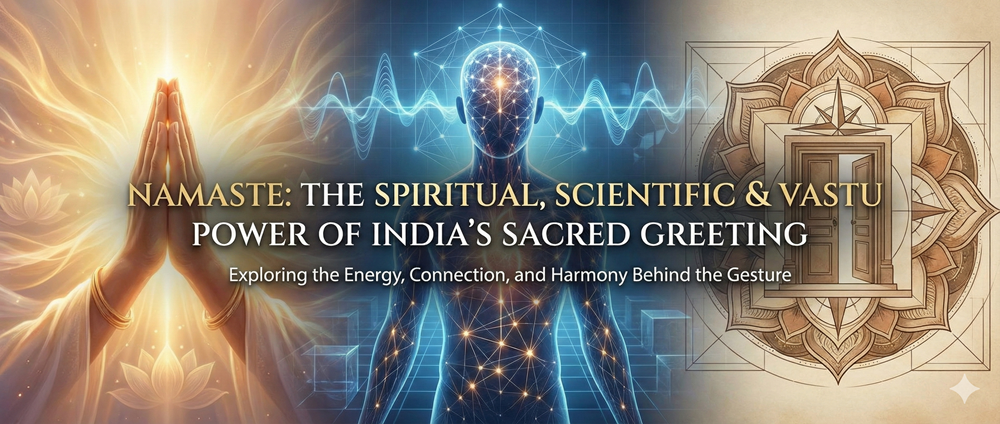
Namaste: The Spiritual, Scientific & Vastu Power of India’s Sacred Greeting
26
Dec
In Hindu culture, greeting someone with Namaste is not a mere social custom, it is a sacred act rooted in spirituality, science, and energy alignment. As a Vastu Consultant and Astrologer, I often explain that our ancient traditions were designed to create balance between the mind, body, soul, and surrounding energy. Namaste is one such timeless practice that reflects humility, respect, and inner harmony.
This blog explores the spiritual meaning of Namaste, its scientific relevance, its Vastu and energy benefits, and why this ancient greeting remains deeply relevant in modern life.
What Is Namaste? Meaning, Origin, and Philosophy
The word Namaste comes from Sanskrit and is formed by two words:
Namah – to bow or offer respect
Te – to you
Together, Namaste means “I bow to you with respect.”
Beyond words, this greeting signifies:
- Humility and gratitude
- Recognition of the divine within another person
- Conscious respect for elders, teachers, and humanity
In Hindu Dharma, Namaste or Namaskar is a way of acknowledging that the same universal energy flows through all beings.
The Namaste Gesture: Posture and Energy Significance
The traditional Namaste posture involves:
- Joining both palms completely
- Placing them near the chest
- Slightly bowing the head
This position aligns directly with the Anahata Chakra (Heart Chakra).
Why the Anahata Chakra Is Important
According to yogic and Vastu principles, the heart chakra governs:
- Love and compassion
- Emotional balance
- Devotion and inner peace
When you perform Namaste, you activate this energy center, creating a state of surrender, calmness, and spiritual openness. This transforms Namaste into a meditative alignment of mind, body, and soul, not just a greeting.
Scientific Perspective: What Modern Science Says About Namaste
Ancient wisdom and modern science often meet and Namaste is a perfect example.
1. Activation of Acupressure Points
Pressing the fingertips together stimulates nerve endings linked to the brain, eyes, and nervous system, which helps:
- Improve concentration
- Enhance memory
- Sharpen awareness
2. Emotional Balance Through the Heart Center
Placing joined hands near the heart promotes emotional stability and positive body language, making a person appear calmer and more composed.
3. Hygiene and Health Benefits
Unlike handshakes or hugs, Namaste avoids physical contact, reducing the spread of germs. This makes it one of the safest and most hygienic greetings, especially in today’s health-conscious world.
Namaste in Yoga and Meditation
In yoga, Namaste is known as Anjali Mudra. It is widely used because it:
- Balances both hemispheres of the brain
- Reduces stress and anxiety
- Improves focus and mindfulness
- Aligns internal energy channels
This is why yogic practices begin and end with Namaste, it symbolizes gratitude, unity, and energetic closure.
Vastu Shastra View: How Namaste Enhances Your Aura
From a Vastu perspective, greetings influence energy exchange. Practicing Namaste:
- Generates positive vibrations
- Maintains healthy energetic boundaries
- Prevents negative energy transfer through touch
- Strengthens personal aura and spiritual protection
- Namaste aligns naturally with Vastu principles by preserving purity of energy (Prana) around the individual.
Astrological Insight: Namaste and Planetary Balance
Astrologically, Namaste supports planets associated with calmness and wisdom. Regular practice helps balance:
Moon – emotional stability and mental peace
Venus – harmony, love, and grace
Jupiter – wisdom, respect, and spiritual growth
People with strong spiritual tendencies naturally feel drawn toward this gesture, as it enhances humility and inner balance.
Why Namaste Should Be a Daily Practice
In a fast-paced and distracted world, Namaste gently reminds us of:
- Mindfulness and awareness
- Respect in human interaction
- Cultural and spiritual identity
- Emotional and energetic purity
Whether greeting family, guests, elders, or strangers, Namaste builds meaningful connections through silent respect.
Conclusion: Namaste - Where Science, Spirituality & Vastu Unite
Namaste is a powerful bridge between Hindu tradition, scientific logic, yogic wisdom, astrology, and Vastu Shastra. It is a small gesture with profound impact. By practicing Namaste daily, one can cultivate peace, positivity, emotional balance, and spiritual awareness while honoring India’s timeless heritage.
For more insights on Vastu Shastra, Astrology, Hindu culture, and spiritual science, visit: